Tuesday, July 12, 2016

Furenexo’s SoundSense is a simple, open-source gadget that helps deaf people stay aware of their surroundings


People with deafness have plenty of ways to navigate everyday situations as if they had no disability at all, but there are still situations that present dangers unique to them — not being able to hear a smoke alarm or gunshot, for instance. SoundSense is a small wearable device that listens for noises that might require immediate attention and alerts the user when it detects one.
“There’s really been an absence of innovation in technology for disabilities over the last decade or even decades,” said Brian Goral, co-founder and CEO of Furenexo, the company behind SoundSense. We talked a few weeks before today’s launch. “What we’re looking to do is bring technology that’s taken for granted, things like cell phones and driverless cars, and apply that to the disability space.”
This first device is a small and simple one for a reason — the company is bootstrapped and has to rely on Kickstarter for the funds to make the SoundSense. They’re also looking for grants from non-profit entities and perhaps government funds.
But really, the company has self-limited on purpose: the idea is to make something practical and cheap that almost anyone can use. Even a person with perfect hearing could wear one of these while walking around with headphones on.
There isn’t much to say about the device — it really is simple. The microphone passes its signal to a microchip, which watches for sudden increases in volume, and when it hears one, the whole doodad vibrates and its LEDs flash. The battery lasts about a day, and recharges over USB.
“It’s not anything deeply profound, like it’s going to revolutionize disability,” Goral said. “But for a person who wants to go jogging, or staying in a city they’ve never been to, just having that extra confidence and awareness that they’re going to know if something’s going wrong.”
Because it’s not a medical device, it can be sold immediately without any kind of FDA approval. And because it’s so cheap (Kickstarter versions will be $25, but the cost can be dropped even further with scale), it can be sold at drug stores or even given away by, for example, a community center catering to deaf people. Not only that, but the schematics for the device are free to download for anyone who wants to tweak them and make their own version.
For testing, guidance, and other benefits of partnership, Furenexo is working with non-profits like Helen Keller Services, which specializes in helping out people who are deaf, blind, or both.
But the SoundSense isn’t the only thing they plan on doing — just the first.
“You start to look at other challenges,” Goral said. “Like, if you’re a pedestrian in a wheelchair, and you’re on Google Maps — you might want a plug-in that avoids complex intersections, or takes you to accessible entrances instead of a generic spot on a map. Or a geofence for Alzheimer’s patients that sends you a text if they’re outside a certain area.”
The company is working on a wrist-mounted pad that the visually impaired can use to type braille, and there are plans for a more comprehensive haptic feedback armpiece that can give simple signals when they approach things like obstacles or other people.
Furenexo also hopes to create a community online that connects people with disabilities to people who want to address them. A person with paralysis might explain the difficulties of navigating the web without using her arms or legs, and an curious engineer might propose a solution or prototype a device.
The SoundSense Kickstarter is live now, so snatch up a device if you think it might be useful to you or someone you know.

Wednesday, June 8, 2016

Magnusmode partners with ROM to create digital museum guides for people with autism


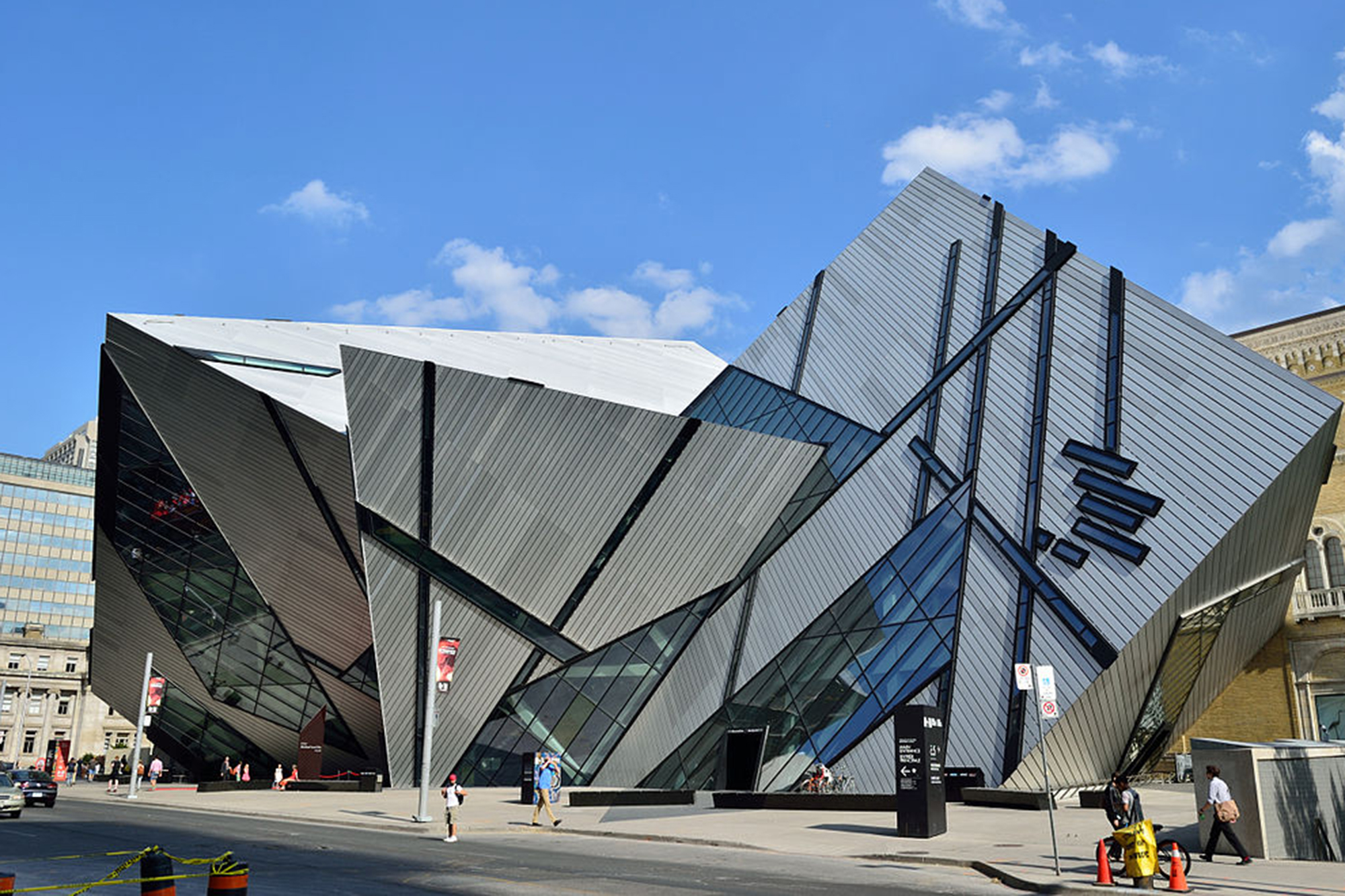
As part of National Access Awareness Week, Toronto-basedMagnusmode has partnered with the Royal Ontario Museum and Easter Seals Canada to launch digital museum guides for visitors with autism.
The guides are built off of the company’s Magnuscards platform, which provides step-by-stepillustrated guides for people with cognitive special needs to navigate through daily tasks like doing laundry. Its web and mobile apps use digital guides, called Card Decks, and users to follow instructions from Magnus, the app’s interactive character.
“Museums have a key role to play in helping remove the isolation that can exist for many people with autism,” said Nadia Hamilton, CEO and founder of Magnusmode. Hamilton was inspired to found Magnusmode through her experience growing up with her brother, Troy, who has autism. “We chose to work with the ROM, a world-renowned institution, as our founding museum partner. With this proven model, we can now begin to collaborate with museums across Canada and around the world with tools that enable museums to educate, engage, and inspire all members of the community.”
The ROM MagnusCards feature two decks: one which guides and prepares the visitor for what to expect when entering the ROM, and the other functions as an educational scavenger hunt through the ROM’s James and Louise Temerty Galleries of the Age of Dinosaurs.

Thursday, May 19, 2016

Harvard engineers designed a 'soft wearable robot'

The flexible suit is aimed at patients with limited mobility.


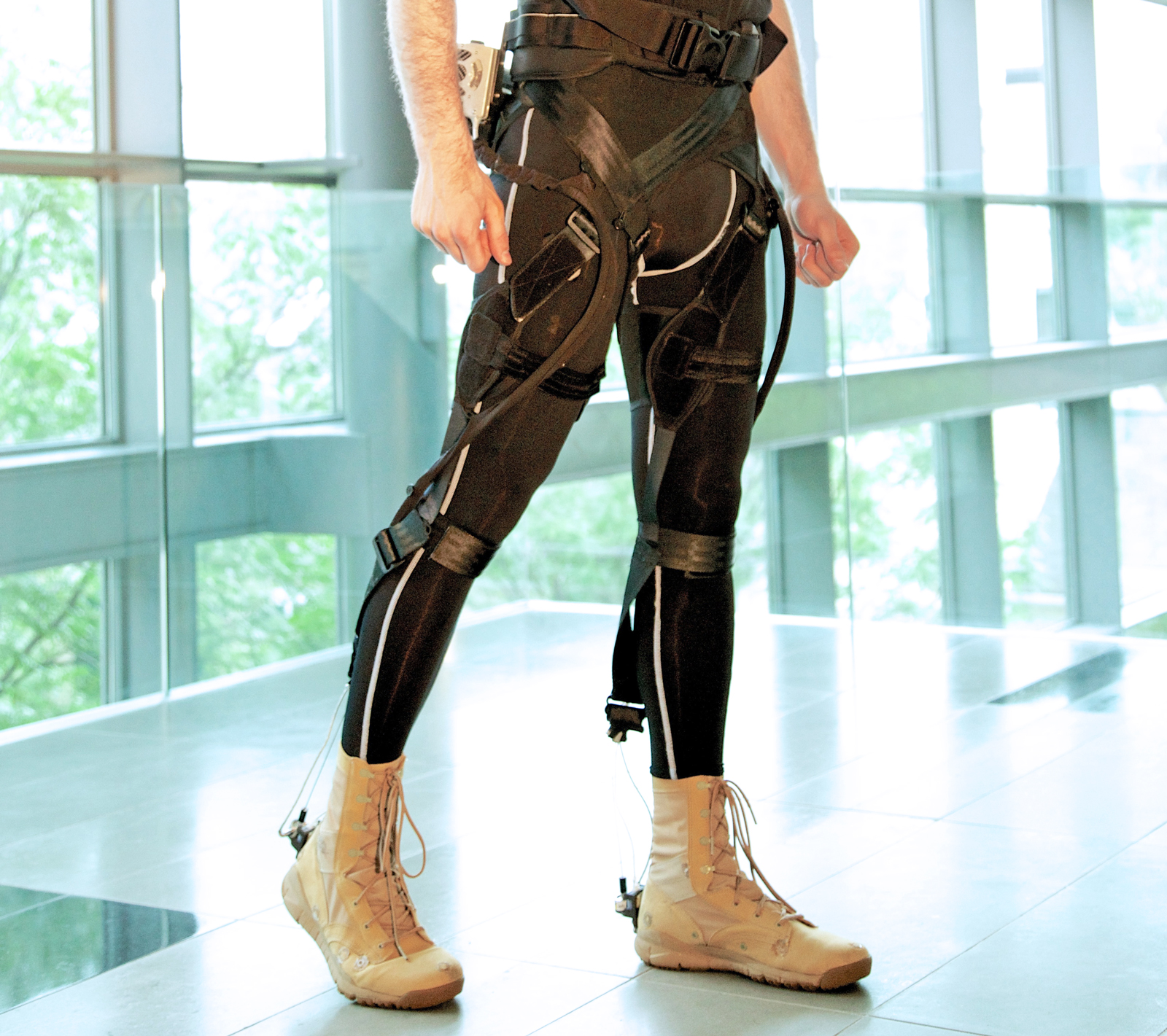
A team of engineers from Harvard University's Wyss Institute for Biologically Inspired Engineering have moved one step closer to a consumer version of a soft, assistive exosuit that could help patients with lower limb disabilities walk again. The Wyss Institute announced todaythat the university is collaborating with ReWalk Robotics to bring its wearable robotic suit to market.
The soft exosuit was designed by Dr. Conor Walsh, who also happens to be the founder of the Harvard Biodesign Lab, along with a team of roboticists, mechanical and biomechanical engineers, software engineers and apparel designers. What really makes the Wyss exosuit stand out from other exoskeletons and robotic suits, is its form-fitting and fabric-based design. Instead of a heavy, rigid frame, the exosuit uses small but powerful actuators tucked in the belt to assist the wearer's legs in a more natural way. While the setup might not be powerful enough to fight off Xenomorphs, it is a much more elegant solution for stroke, MS and elderly patients who still have partial mobility, but need additional assistance.
"Ultimately this agreement paves the way for this technology to make its way to patients," Walsh said of his teams partnership with ReWalk. According to Harvard, the exosuit's development has already had a lasting impact beyond those medical applications as well. As the announcement puts it, the team's work has "been the catalyst for entirely new forms of functional textiles, flexible power systems and control strategies that integrate the suit and its wearer in ways that mimic the natural biomechanics of the human musculoskeletal system."

Friday, May 13, 2016

An Entrepreneur Makes Speech a Reality for All


Smartstones, Inc., a company taking great leaps in improving communication technology, is today releasing a new product that will directly improve millions of lives. GlobalMindED is proudly committed to supporting the innovative efforts of companies like Smartstones, whose products and services increase access, equity and opportunity for people of all backgrounds and abilities. Smartstones’ new development impacts not only those with communication challenges and their families, but also serves to democratize education and the exchange of information.

Since 2013, the existing application :prose™ has allowed nonverbal people the ability to “swipe to speak,” “tap to speak,” and “gesture to speak” with iOS devices and their own Touch™ device. :prose is the de-facto standard for nonverbal sensory communication. Today, Smartstones has taken their work even further, in the form of breakthrough “think to speak” technology. Using brainwave commands and a wireless connected EEG headset from Emotiv, the technology can send a “thought message” to anyone via push notification. 

“There are hundreds of millions of people in the world affected by various communication challenges, including autism, ALS/Lou Gehrig’s disease, cerebral palsy, Parkinson’s disease, strokes, brain and spinal cord injuries—and many are looking for greater independence, social inclusiveness, self-expression and to be understood,” says Smartstones Founder and CEO Andreas Forsland. “Communication is the most important part of the human experience, and we want to ensure every person has the ability to express their most basic needs.” With 2.3 million nonverbal autistic children in the USA alone, and over 70 million on the autism spectrum worldwide, everyone has a unique need when it comes to a communication interface.
Andreas came up with this revolutionary idea when tragedy befell his own mother. His mother, then 70 years old, developed pneumonia which eventually led to renal failure; the doctors put her on life support, and she spent several weeks in intensive care, unable to move or speak. Serving as the main point of contact between her, her doctors, lawyers, and long-distance family and friends inspired him to find—and when he couldn’t find one, to create—a tool that would allow anyone to receive and transmit brief, but absolutely vital, messages when communication is otherwise impossible. Thankfully, his mother recovered; Andreas continued his quest, all the while building on his experience as a coach and mentor to entrepreneurs. Andreas attended Startup Weekend just over a year later to present his solution.

How It Works:
For people with Autism Spectrum Disorder and other communication challenges, communicating verbally with others can be difficult or impossible. Traditional Alternative and Augmentative Communication (AAC) apps use pictogram-based approaches which, while versatile, can take months or even years to fully learn. :prose works by translating sensor data such as touch, motion, and now thought gestures, into spoken phrases. The integration of EEG technology makes :prose accessible to even more people, including those with motor-skill inhibiting conditions, who may find touch gestures difficult to perform reliably.

Recently, Smartstones worked alongside PathPoint, an organization that provides services to over 2,000 individuals with developmental, psychiatric, and physical disabilities to test the technology. 

“People have been trying to get neural devices to speak for decades,” said Gil Trevino, Assistive Technology Manager at PathPoint. “I’m happy to share that Smartstones has done it. One of our patients with severe disabilities is able to control :prose with her mental commands. Within minutes she was speaking several phrases aloud, compared to years of training with other technologies. She became a whole new person when she heard herself speak.”

Smartstones has an official partnership with Emotiv to provide the wearable EEG head-set. “Emotiv is incredibly proud to be involved in the :prose program and to be providing the wearable EEG component, said Nuri Djavit, Emotiv Chief Marketing Officer. “From the start, our mission has been to advance our understanding of the human brain and to find ways to improve the human condition—especially for those facing adversity.” 

The app is available for $29.99 (50% off during the month of April in recognition of National Autism Awareness Month) and integrates with a range of devices. GlobalMindED is delighted to connect with anyone opening opportunities for different populations, and we applaud Andreas for his groundbreaking innovations.